植物盐胁迫感知与信号转导
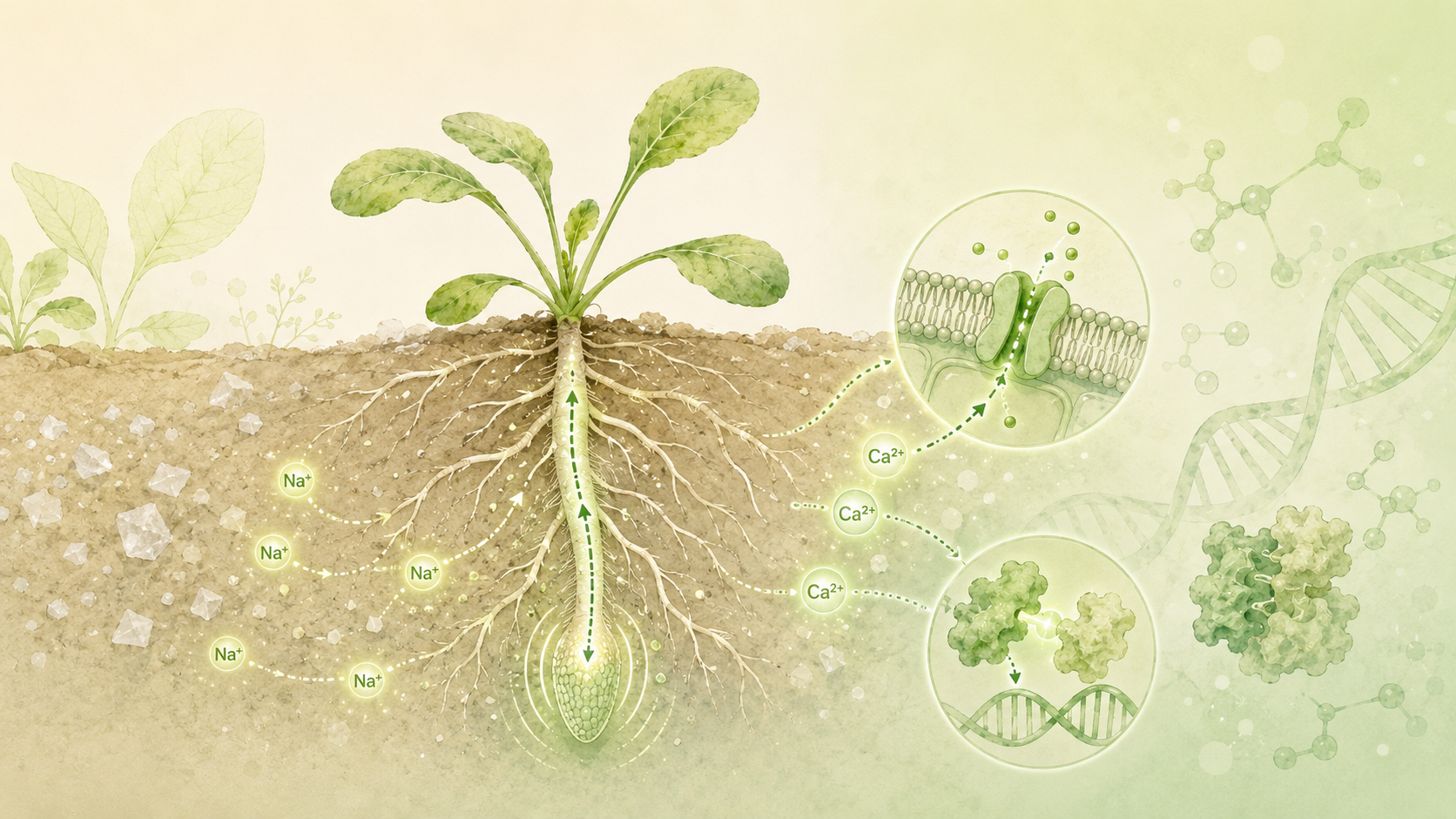
研究植物如何感知并响应盐胁迫
Wang, Y.#, Cao, Y.#, and Qin, G.
Fate determination is indispensable for the accurate shaping and specialization of plant organs, a process critical to the structural and functional diversity in plant kingdom. The TEOSINTE BRANCHED 1/CYCLOIDEA/PROLIFERATING CELL FACTOR (TCP) family of transcription factors has been recognized for its significant contributions to plant organogenesis and morphogenesis. Recent research has shed light on the pivotal roles that TCPs play in fate determination. In this review, we delve into the current understanding of TCP functions, emphasizing their critical influence on fate determination from the organelle to the cell and organ levels. We also consolidate the molecular mechanisms through which TCPs exert their regulatory effects on fate determination. Additionally, we highlight intriguing points of TCPs that warrant further exploration in future research endeavors.
Yu, H.#, Wang, Y.#, Wang, Y.#, Deng, X.W., and Qin, G.
Light and DELLA proteins are central factors controlling seed germination which is critical for seed plant survival and agricultural production. However, the mechanisms underlying DELLA degradation under different light conditions during seed germination remain to be clarified. Here, it is reported that TIE1-ASSOCIATED RING-TYPE E3 LIGASE4 (TEAR4) and other TEARs redundantly promote DELLA degradation to positively regulate seed germination in Arabidopsis. The tear1/2/3/4/5/6 sextuple mutant displayed delayed seed germination under the white or PhyB-dependent light condition, and nearly no seed germination under the PhyA-dependent light condition. The DELLA protein REPRESSOR OF ga1-3 (RGA) accumulated in tear1/2/3/4/5/6, and disruption of RGA and GA-INSENSITIVE (GAI) in tear1/2/3/4/5/6 rescued defective seed germination. Far-red (FR) light rapidly induced TEARs, and TEAR4 is shown to act as an E3 ligase. It is showed that both GA-dependent and TEAR-mediated DELLA degradation pathways are indispensable for PhyA-dependent germination. It is found that TEAR homologs PpTEAR1 and PpTEAR2 from the moss Physcomitrium patens interacted with Arabidopsis DELLAs to promote their degradation, and overexpression of PpTEAR1 or PpTEAR2 completely rescued defective PhyA-dependent seed germination in phya-211. This findings demonstrate that TEARs act as critical players in fine-tuning seed germination, and TEAR-mediated DELLA degradation might be an ancient pathway conserved in plant kingdom.
Wang, Y.#, Wang, N.#, Lan, J., Pan, Y., Jiang, Y., Wu, Y., Chen, X., Feng, X., and Qin, G.
The style and stigma at the apical gynoecium are crucial for flowering plant reproduction. However, the mechanisms underlying specification of the apical gynoecium remain unclear. Here, we demonstrate that Class II TEOSINTE BRANCHED 1/CYCLOIDEA/PCF (TCP) transcription factors are critical for apical gynoecium specification in Arabidopsis (Arabidopsis thaliana). The septuple tcp2 tcp3 tcp4 tcp5 tcp10 tcp13 tcp17 (tcpSEP) and duodecuple tcp2 tcp3 tcp4 tcp5 tcp10 tcp13 tcp17 tcp24 tcp1 tcp12 tcp18 tcp16 (tcpDUO) mutants produce narrower and longer styles, while disruption of TCPs and CRABS CLAW (CRC) or NGATHAs (NGAs) in tcpDUO crc or tcpDUO nga1 nga2 nga4 causes the apical gynoecium to be replaced by lamellar structures with indeterminate growth. TCPs are predominantly expressed in the apex of the gynoecium. TCP4 interacts with CRC to synergistically upregulate the expression level of NGAs, and NGAs further form high-order complexes to control the expression of auxin-related genes in the apical gynoecium by directly interacting with TCP4. Our findings demonstrate that TCP4 physically associates with CRC and NGAs to control auxin biosynthesis in forming fine structures of the apical gynoecium.
Lan, J.#, Wang, N.#, Wang, Y., Jiang, Y., Yu, H., Cao, X., and Qin, G.
Abnormal high temperature (HT) caused by global warming threatens plant survival and food security, but the effects of HT on plant organ identity are elusive. Here, we show that Class II TEOSINTE BRANCHED 1/CYCLOIDEA/ PCF (TCP) transcription factors redundantly protect ovule identity under HT. The duodecuple tcp2/3/4/5/10/13/17/24/1/12/18/16 (tcpDUO) mutant displays HT-induced ovule conversion into carpelloid structures. Expression of TCP4 in tcpDUO complements the ovule identity conversion. TCP4 interacts with AGAMOUS (AG), SEPALLATA3 (SEP3), and the homeodomain transcription factor BELL1 (BEL1) to strengthen the association of BEL1 with AG-SEP3. The tcpDUO mutant synergistically interacts with bel1 and the ovule identity gene seedstick (STK) mutant stk in tcpDUO bel1 and tcpDUO stk. Our findings reveal the critical roles of Class II TCPs in maintaining ovule identity under HT and shed light on the molecular mechanisms by which ovule identity is determined by the integration of internal factors and environmental temperature.
Wang, Y.#, Zhao, H.#, Xu, L., Zhang, H., Xing, H., Fu, Y., and Zhu, L.
One of the strategies that plants adopt to cope with an unfavorable environment is to sacrifice their growth for tolerance. Although moderate salt stress can induce root growth inhibition, the molecular mechanisms regulating this process have yet to be elucidated. Here, we found that overexpression of a zinc finger-homeodomain family transcription factor, HOMEOBOX PROTEIN 24 (HB24), led to longer primary roots than in the wild-type in the presence of 125 mM NaCl, whereas this phenotype was reversed for the hb24 loss-of-function mutant, indicating a negative impact of HB24 on salt-induced root growth inhibition. We then found that salt stress triggered the degradation of HB24 via the ubiquitin–proteasome pathway, as mediated by a plant U-box type E3 ubiquitin ligase 30 (PUB30) that directly targets HB24. We verified that HB24 is able to directly bind to the promoters of Sugars Will Eventually be Exported Transporter 11/12 (SWEET11/12) to regulate their expression in roots. Through genetic and biochemical assays, we further demonstrated that the HB24-SWEET11 module plays a negative role in salt-induced root growth inhibition. Therefore, we propose that under salt stress, PUB30 mediates HB24′s degradation, thereby downregulating the expression of SWEET11, resulting in reduced sucrose supply and root growth inhibition.
Li, J., Wang, Y., Zou, W., Jian, L., Fu, Y., and Zhao, J.
The NDC80 complex is a conserved eukaryotic complex composed of four subunits (NUF2, SPC25, NDC80, and SPC24). In yeast and animal cells, the complex is located at the outer layer of the kinetochore, connecting the inner layer of the kinetochore and spindle microtubules (MTs) during cell division. In higher plants, the relationship of the NDC80 complex with MTs is still unclear. In this study, we characterized the biological function of AtNUF2, a subunit of the Arabidopsis NDC80 complex. We found that AtNUF2 is widely expressed in various organs, especially in different stages of embryonic development. It was verified that AtNUF2 co-localized with α-tubulin on MTs during mitosis by immunohistochemical assays. Mutation of AtNUF2 led to severe mitotic defects, not only in the embryo and endosperm, but also in seedlings, resulting in seed abortion and stagnating seedling growth. Furthermore, the biological function of AtNUF2 was studied using partially complemented nuf2-3/-DD45;ABI3pro::AtNUF2 (nuf2-3/-DA) seedlings. The chromosome bridge and lagging chromatids occurred in nuf2-3/-DA root apical meristem cells, along with aberration of spindle MTs, resulting in blocked root growth. Meanwhile, the direct binding of AtNUF2 and AtSPC25 to MTs was determined by an MT co-sedimentation assay in vitro. This study revealed the function of AtNUF2 in mitosis and the underlying mechanisms, modulating spindle MT organization and ensuring chromosome segregation during embryo, endosperm, and root development, laying the foundation for subsequent research of the NDC80 complex.
Zhao, H.#, Wang, Y.#, Zhao, S., Fu, Y., and Zhu, L.
Indole-3-acetic acid (IAA) is a predominant form of active auxin in plants. In addition to de novo biosynthesis and release from its conjugate forms, IAA can be converted from its precursor indole-3-butyric acid (IBA). The IBA-derived IAA may help drive root hair elongation in Arabidopsis thaliana seedlings, but how the IBA-to-IAA conversion is regulated and affects IAA function requires further investigation. In this study, HOMEOBOX PROTEIN 24 (HB24), a transcription factor in the zinc finger-homeodomain family (ZF-HD family) of proteins, was identified. With loss of HB24 function, defective growth occurred in root hairs. INDOLE-3-BUTYRIC ACID RESPONSE 1 (IBR1), which encodes an enzyme involved in the IBA-to-IAA conversion, was identified as a direct target of HB24 for the control of root hair elongation. The exogenous IAA or auxin analogue 1-naphthalene acetic acid (NAA) both rescued the root hair growth phenotype of hb24 mutants, but IBA did not, suggesting a role for HB24 in the IBA-to-IAA conversion. Therefore, HB24 participates in root hair elongation by upregulating the expression of IBR1 and subsequently promoting the IBA-to-IAA conversion. Moreover, IAA also elevated the expression of HB24, suggesting a feedback loop is involved in IBA-to-IAA conversion-mediated root hair elongation.